Search This Blog

Sunday, September 4, 2011

Onam

Onam is the largest festival in the Indian state of Kerala. It falls during the first month of the Malayalam calendar which is Chingam (August–September) and marks the homecoming of the legendary King Maveli. The festival lasts for ten days and is linked to many elements of Kerala's culture and tradition. Intricate flower carpets, elaborate banquet lunch, snake boat races, Puli Kali, and the Kaikottikkali dance all play a part in the festival. And it can be undoubtedly said that these elements constitute the diversity, colorfulness and richness that no other festival can claim in this world.

Significance
Onam is an ancient festival which still survives in the Modern times. Kerala's rice harvest festival and the festival of rain flowers which fell on the Malayalam month of Chingam celebrated the annual visit from pathalam of the very noble Demon King Maveli. Onam is unique since king Maveli is revered by people of Kerala from prehistory.

According to the legend, Kerala witnessed its golden era during the reign of King Mahabali. Everybody in the state was happy and prosperous and the king was highly regarded by his subjects. He was that much highly regarded among the subjects that even the Gods under Indra became jealous of Mahabali, they approached Mahavishnu claiming that Mahabali is now equivalent to an Indra. Since a world with two Indras represents imbalance, Mahavishnu assumed the form of a dwarf: the Vamana avatara had tricked him to Pathalam, the Underworld. However, as Mahabali is equal to an Indra, he is to wait until the next Yuga where he would be the Indra. In the meantime, with the grace of Mahavishnu, Mahabali visits his people on an annual basis. Mahavishnu serves Mahabali as a gatekeeper in the world of Pathalam as the Lord himself serves his greatest devotees.

It is this visit of Mahabali that is celebrated as Onam every year. People including children celebrate the festival in a grand way and impress upon their dear King that they are happy and wish him well.

The rich cultural heritage of Kerala comes out in its best form and spirit during the ten day long festival. The most impressive part of Onam celebration is the grand feast called Onasadya, prepared on Thiruonam. It is a nine course meal consisting of 11 to 13 essential dishes. Onasadya is served on banana leaves and people sit on a mat laid on the floor to have the meal.

Another enchanting feature of Onam is Vallamkali, the Snake Boat Race, held on the river Pampa. It is a colourful sight to watch the decorated boat oared by hundreds of boatmen amidst chanting of songs and cheering by spectators and viewers.

There is also a tradition to play games, collectively called Onakalikal, on Onam. Men go in for rigorous sports like Talappanthukali (played with a ball), Ambeyyal (Archery), Kutukutu and combats called Kayyankali and Attakalam. Women indulge in cultural activities. They make intricately designed flower mats called, Pookalam in the front courtyard of the house to welcome King Mahabali. Kaikotti kali and Thumbi Thullal are two graceful dances performed by women on Onam. Folk performances like Kummatti kali and Pulikali add to the zest of celebrations.Mahabali's rule is considered the golden era of Kerala.


The legend


Mahabali was the grandson of Prahlad (son of Hiranyakashyap who was slain by Vishnu in his Narasimha Avataram). Prahlad, despite being an Asura, had great faith in Vishnu. Mahabali learned the act of love and devotion to Lord Vishnu as a child, from Prahlad.
 
Mahabali conquers the three worlds
Kashyapa had two wives, Diti and Aditi, who were the parents of the demons and the gods (Asuras and Devas) respectively. Kashyapa, who had gone to the Himalayas to do penance, on his return found Aditi weeping. By divine insight, Kashyapa instantly recognised the cause of her grief. He tried to console her saying that nothing happens in the world without divine will and people should go on doing their duties. He asked her to pray to Vishnu and taught her Payovrata, a ritual that has to be observed from the 12th day of the bright half of Karthika (Sukla-paksha Dvadasi). Since Aditi carried out the Vrata with a pious heart, Vishnu appeared before her and informed her that he would help Indra.

Alternatively, the Devas were very annoyed as Mahabali became the ruler of all the three worlds having defeated the Devas. Devas, the celestial beings, were annoyed and jealous. The gods approached Vishnu and asked for his help. Vishnu said to the Devas that Mahabali is doing good things to his subjects and is eligible to become sura (devas). You devas should not be jealous about that. Being jealous would make you asuras. Vishnu decided to test Mahabali.

In the meantime, Mahabali was performing the sacrificial rite of the Viswajith Yagam or Aswamedha Yagam on the banks of Narmada River. He also declared that he would give anything that anyone sought from him during this Yagam.

Vamana visits Mahabali

Taking advantage of the Yagam and Mahabali's declaration, Vamana (Mahavishnu disguised as a Brahmin) came to the Yaga-shala. As he approached them, the sages assembled there perceived the extraordinary effulgence form of the young lad. Mahabali went forth to receive the Brahmin boy with all traditional honours and gave him an eminent seat befitting the status of a holy person. With the usual courtesy given to the people who come to ask for help, Mahabali told him that it was his good fortune that Vamana had chosen to honour him with his presence. Whatever Vamana desired, Mahabali was ready to fulfill. Vamana smiled and said: "You need not give me anything great. It is enough if you give me that extend of land covered by three footsteps of mine".

On hearing him, Mahabali's preceptor, the Brahmin Shukracharya (a Daitya priest), who had visions of the future, told Mahabali that the one who had come to take alms from him was not an ordinary Brahmin but Lord Vishnu Himself having assumed this form. He advised Mahabali not to promise the lad anything. But Mahabali was a king who would never go back on his word, considering it sinful to do so. Shukracharya insisted that he should not fulfill the demand of Vamana as he had come to deprive him of all his possessions.
Onappottan, in traditional costume is a custom in northern parts of Kerala. Onappottan visists houses during the onam and gives blessings. Off late onappottan has become a rare sight, confined to villages.

Mahabali, determined to honour the word given to Vamana, begged the pardon of his Guru for disregarding his advice. Earlier, while Mahabali was embarking on the war with Indra, he had prostrated at the feet of his preceptor, Shukracharya, and on his advice had he started the Vishwajith Yagam from which he secured some very powerful weapons. It was only because of Shukracharya's help that he was able to conquer Indra. Mahabali's refusal angered Shukracharya. He cursed Mahabali, saying: 'As you have not heeded your Guru's words, you will be reduced to ashes'. Mahabali was firm and replied: 'I am prepared to face any consequence but will not go back on my word'.

Mahabali's reign ends

Saying so, he asked Vamana to measure the desired three feet of land. All attempts of Shukracharya to dissuade Mahabali proved futile. Mahabali considered everyone who came to him for help as god himself and never refused them anything. Mahabali told his Guru: "Prana (life) and Maana (honour) are like the two eyes of a person. Even if life goes, honour should be protected. Knowing that the person that has come now is the Lord Himself, I should be the most fortunate one as the Lord, who gives everything to mankind, is seeking something from me." Mahabali gladly said that even if Vishnu himself were to come to his sacrifice and ask for anything, he would deliver it.

Vamana grew in size until he towered above the heavens. With one footstep, he measured all of the earth. With the second, he claimed all of heaven. There was still one foot of territory that Mahabali owed him. Mahabali requested Vamana to place the final step on his head as the third step of land, for he had no other left. Vamana did so and in doing so, pushed him down to Patala, the underworld (the kingdom beneath the earth). The site where he placed his foot is said to be the village of Thrikkakara (meaning place of the holy foot), and is the centre of the renowned Onam festival celebrated in relation to the legend of King Mahabali.

Vishnu's blessings

For the devotion of this daitya, Mahabali, Lord Vishnu (Vamana) granted him rule over the underworld. It was also granted that he would hold the position of Indra for one Manvantara, thus fulfilling his devotee's desire (the office of Indra being a rotating position, changing every Manvantara).

As a last gift, Mahabali was granted permission to visit his subjects once a year. Thus, Keralites celebrate the Onam festival to commemorate the memory of the Great King Mahabali who would keep his promise to visit. Mahabali fulfilled his name as the great martyr for the sake of Truth ("Satya"). The name "Mahabali" itself means Great Sacrifice.

During Onam, the feast and festive mood of the people, dressed in their best, is considered reminiscent of the prosperous and truthful life of the subjects during Mahabali's flawless reign. People wear new clothes (Vastra) during Onam. The 'Vastra' also stands for heart. Thus the significance of wearing new clothes is about making the heart new by removing all bad thoughts and feelings. People forgetting their sectarian outlooks, join together to welcome the auspicious 'Thiruvonam' day.

It would seem unfair that Lord Vishnu punished Mahabali, who like his grandfather (Prahlada), was deemed one of the greatest devotees of Lord Vishnu, and a very just king. However, Mahabali is not considered penalized by Vishnu, since he was granted the blessings of Vishnu and his remembrance allowed to be observed for eternity by way of Onam. He was also given the opportunity to keep his head under Lord Vishnu's holy feet, thus allowing all his sins to be wiped away.

Also, by the grant of Vishnu, Mahabali will be the next (eighth) Indra during the time of the eighth Manu, Savarni Manu. Purandara is the current Indra.

It is believed that Mahabali became the greatest earthly devotee of Vishnu by sacrificing his kingdom to him.

The Ten Days of Celebration
 
The celebrations of Onam start on Atham day, 10 days before Thiruvonam. The 10 days are part of the traditional Onam celebrations and each day has its own importance in various rituals and traditions. Earthen mounds, which look somewhat like square pyramids, representing Mahabali and Vamana (an Avatar of Vishnu) are placed in the dung-plastered courtyards in front of the house and beautifully decorated with flowers. Known as ‘Onapookkalam’, it is a carpet made out of the gathered blossoms with one or two varieties of foliage of differing tints pinched up into little pieces to serve the decorator's purpose. It is a beautiful work of art accomplished with a delicate touch and a highly artistic sense of tone and blending. (In a similar manner North Indians make something called "Rangoli" which is made of powders of various colors.) When completed, a miniature pandal, hung with little festoons is erected over it.

Atham-
The first day of Onam Celebrations
 
Onam starts with Atham day in the Malayalam month of Chingam. Its believed that King Mahabali start his preparations to descend from heaven to Kerala on this day. The day also marks the start of festivities at Thrikkakara Temple (considered as abode of Mahabali). The Onam celebrations across the state, starts off with a grand procession at Thrippunithura near Kochi called Athachamayam. In olden days, the Kochi Maharaja used to head a grand military procession in full ceremonial robes from his palace to the Thrikkakara Temple. After independence, the public took over the function and celebrated as a major cultural procession which kicks off the official celebrations of Onam. Elephant processions, folk art presentations, music and dancing make Athachamyam a spectacular event which is now aggressively promoted as a tourist event.
Athachamayam 

Onam Pookkalam

The traditional ritual of laying Pookalam (floral carpet) starts on Atham day. The size of pookalam on this day is called as Athapoo and will small which eventually grew day after day. Only yellow flowers will be used on this day and the design will be simple. Also the statues of Mahabali and Vamanan will be installed on the entrance of each house on this day.

Onam Pookkalam
Onam Pookkalam
Chithira- The second day of Onam Celebrations
The second day is marked off when a second layer is added to pookalam design with 2 different colours apart from yellow (mostly orange and creamy yellow). On this day, people starts cleaning the house-hold to prepare for the Thiruvonam day.
Chodi- The third day of Onam Celebrations
The pookalam now will start growing in its size by adding new layers or designs with at least 4 to 5 different flowers. The day also marks the start of shopping activities. Onam is associated with gifting new clothes, hence from this day onwards people start buy new clothes and jewellery.
Vishakam- The fourth day of Onam Celebrations
Vishakam is considered to be one of the most auspicious days of Onam. In olden days, the markets open this harvest sale on this day, making one of the busiest days in the markets for public. Today Vishakam marks the start of many Onam-related competitions like Pookalam competitions etc.

Anizham- The fifth day of Onam Celebrations

Anizham is one of the most important day in the Onam days as it kicks off the  great Vallam Kali (Snake boat) at many parts of Kerala. A mock Vallam Kali is conducted on this day at Aranmula as a dress-rehearsal for the famed Aranmula boat race which will be held after Onam.

Thriketa- The sixth day of Onam Celebrations
Onam Pookkalam

By the sixth day, the public frenzy starts going on higher side. Most of the schools and public offices starts issuing holidays from this day onwards and people starts packing their bags to their native homes to celebrate the festival with their dear ones. The pookalam design will be very large by this time, with at least 5 to 6 new flowers types added to the original designs.

Moolam- The seventh day of Onam Celebrations

Puli kali 


On the seventh day, the smaller versions of traditional Ona Sadya (Onam special buffet lunch) starts in many places. Most of the temples offers special sadhyas on from this day. Festivities include Puli Kali (Masked leopard dance) and traditional dance forms like Kaikotti Kali also performed in various functions. The official Government celebrations starts on this day with heavy illuminations in Thiruvananthapuram City, Kochi city and Kozhikode along with fireworks.


Pooradam- The eight day of Onam Celebrations
 
Thikkakarayappan 
 
The day marks off with a major traditional ritual where the small statues of Mahabali and Vamana will be washed and cleaned and taken around the house as a procession. It will be later installed in the center of the pookalam smeared with rice-flour batter. The smearing is done by small children whom will be Pooradaunnikkal. From this day onwards, the statue will be called Onathappan.
The pookalam design from Pooradam day onwards get much bigger and complex in design. Shopping will be one of the major activities as the public will be making final purchases for the great Thiruvonam day.


Uthradom- The ninth day of Onam Celebrations
Uthradom is the ninth and the penultimate day of the festival of Onam. It is considered as Onam eve and celebrated in a very big way. The importance of this day is last minute extreme shopping frenzy called as Uthradapachal and is considered the most auspicious day for purchase of fresh vegetables and fruits along with other provisions from the Thiruvonam day.
Uthradam is known as FIRST ONAM because it marks the day when King Mahabali descends Kerala and the traditional myths says that the king will spend the next four days touring his erstwhile kingdom and blessing the subjects. Due to this Urthadom is celebrated in a very pompous manner with larger pookalam and celebrations in household. The Urthada lunch is very famous tradition. Women normally cuts the first set of vegetables on this day that marks the celebrations of Thiruvonam in each household and preparations for grand Onam buffet starts in evening of Uthradom day.

Thirvuonam- The tenth day of Onam Celebrations


The final day of Onam that culminates the 10 days of Onam Carnival. The day is known as Thiru-Onam (Sacred Onam Day) also known as SECOND ONAM. Myth says, it was the day Mahabali was suppressed to underworld by Vamana. The day marks return of Mahabali to his fabled land (Kerala), as per the boon he received from Vamana to meet his subjects and bless them. Apart from this myth, this day is considered auspicious being birthdays of several temple deities like Vamana of Thrikkara temple, Sree Ppadmanabha Swamy of Thiruvananthapuram etc. Though a traditional Hindu festival, Onam today has emerged as a secular festival associated with harvest time of Kerala.

Activities begin early in the morning. People clean their house, smear the main entrance with rice-flour batter (a traditional welcome sign), take early bath, wear new clothes and distribute alms to needy. The eldest female member of each family presents clothes to all the members of the family. Special prayers and Masses are organized in temples, churches and mosques that highlight the secular nature of festival. Later a very special and the biggest of all days, Pookalam is prepared to welcome Mahabali.


The most important activity of Thiruvonam is the grand Thiruona-Sadya, well known for being one of the most sumptuous feasts ever prepared by mankind. The level of sumptuous varies at each individual household, however every household tries to make as grand as possible as they can. The feast served on plantain leaves have more than 13 to 15 curries apart from other regular items. In hotels and temples, number of curries and dishes can go up to 30 for the feast. Whatever may happen no malayalee will miss the Grand ona-sadya. There is a saying in Malayalam that "Kanam Vittum Onam Unnanam" which means "We should have the Thiruvonam lunch even if we have to sell all our properties" which shows the importance of the grand lunch on the Thiruvonam day.


ona-sadya 


A fabulous display of fireworks turns the capital Thiruvananthapuram and Kochi into a veritable fairyland. Sumptuous feasts are prepared in every household. Even the poorest of the poor manage to find something for himself to celebrate the national festival in his own humble way.

The afternoon is marked with various traditional Onam games normally seen common in rural areas and those organized by resident associations, clubs etc. in large cities.


Post Onam celebrations

Normally Onam celebrations ends by Thiruvonam. However two following days after Thiruvonam is also celebrated as Third and Fourth Onam. The third Onam is called as Avvittom which marks the preparations of King Mahabali for his ascension to heavens. The main ritual for the day is to take the Onattappan statute placed in middle of Pookalam for past 10 days and immense in nearby rivers or seas. The pookalam will cleaned and removed and marks the finale to the Onam celebrations. The day is also important, as it marks the great dance of lions, known as Puli Kali where men in costumes of lions, dances and make a procession around the town of Thrissur in large groups. The Puli-kali can marks the end of traditional Onam celebrations.


Vallamkali


Fourth Onam is called as Chatayam which marks the birthday of one of the famous social reformer of Kerala, Sree Narayana Guru and celebrated as Narayana Jayanthi in his honour. The official government celebrations ends on this day with a mega dance festival in the capital city- Thiruvananthapuram.


Onam activities

The most important things about Onam are the onakkodi, the new clothes worn on this day and onam sadya, a feast which is quite elaborate. This is usually a feast served on banana leaves and serves rice along with at least an array of 4 dishes. Traditional pickles and papadam are also served. Dessert is usually 'payasam', a sweet dish made of milk, sugar and other traditional Indian savories.

During Onam, people create a multi-coloured floral decoration on the ground in the front of their home called pookkalam. Young children especially girls are often entrusted with the task of gathering and laying out the flowers in elaborate patterns. Competitions are held on onam day to create this floral design. It is usually 1.5 m in Diameter usually in circular shape. A lamp is usually placed as part of the design. In the recent years, the floral designs have evolved from the traditional circular shape to unique designs depicting different cultural and social aspects of Kerala life.

The Vallamkali (the snake boat race) is another event that is synonymous with Onam. Well-known races include the Aranmula Boat Race and the Nehru Trophy Boat Race. About 100 oarsmen row huge and graceful snake boats and men and women come from far and near to watch the snake boats skim through the water.

During the Onam, Keralite Hindus install an image of Thrikkakara Appan (Vishnu in the form of Vamana) in their home just as Hindus install images or murtis of Lord Ganesh on the Ganesh Chaturthi festival.

This festival is also important because of its popularity with all communities within Kerala. Although the festival of Onam originated with, and is connected to the Hindu religion, it is celebrated today with equal fervour by the Hindus, Muslims and Christians of Kerala.

Many lamps are lit in Hindu temples of Kerala during this celebration. A palmyra tree is erected in front of temples and surrounded with a wooden balustrade and covered with dry palmyra leaves. It is lit with a torch and burned to ashes to signify that Mahabali went to hell as a sacrifice


maveli nadu vaneedum kalam,

manusharellarum onnupole
amodhathode vasikkum kalam
apathangarkkumottillathanum
kallavum illa chathiyumilla
ellolamilla polivachanam
kallapparayum cherunazhiyum
kallatharangal mattonnumilla
adhikal vyadhikalonnumilla
balamaranangal kelppanilla


Sant Namdev

By
Sri Swami Sivananda

Introduction

Namdev of Maharashtra was a saint of mediaeval India. He was not a servant of Lord Krishna, but His companion. Namdev was an Amsa (part) of Lord Krishna.
Namdev was a contemporary of Jnanadev, the famous saint of Maharashtra, being his senior in age by about five years. He was born in 1269 A.D. He came of a family of tailors who were sincere devotees of Vittala of Pandharpur. The family members were observing the Wari of Pandharpur, i.e., going on pilgrimage twice a year on the first eleventh day of the Ashadh (June-July) and Kartik (October-November) months. The family originated from a village called Narsibamani on the bank of the river Krishna, near Karad, in district Satara. Being a great devotee of Vittala and wishing to improve his material prospects, Dama Setti, the father of Namdev, had moved to Pandharpur a year or two before his son’s birth.
Namdev, from his very childhood; was like Prahlad. At the age of two, when he began to talk, the first correct word he uttered was ‘Vittala’, and since then, he continued with the repetition of that sacred name incessantly, without any help or instruction from others. He found great pleasure when every day his mother Guna Bai took him to the temple of Vithoba for offering worship to the Deity. His next step was, when at the age of about seven, he prepared a pair of cymbals and spent his time in dancing and singing, doing Bhajan, to the neglect of everything—food, studies in school, rest, sleep, etc. His devotion to Vithoba was so innocent and sincere that he used to treat Him sometimes as his dearest brother or as his playmate.
One day, as Namdev’s mother was busy, she asked Namdev to take the plate of offerings to Vithoba. Namdev went to the temple, placed the plate of eatables before Vithoba and asked Him to accept the offering. However, when Namdev did not find any evidence of acceptance by Vithoba, he cried so bitterly that Vithoba actually assumed a human form and accepted the offerings gratefully. Namdev’s mother was surprised when her son came back in great joy with an empty plate and explained to her that Vithoba had accepted the offerings by actually consuming the eatables presented in the plate. So, the next day, she herself accompanied Namdev (but without his knowledge) to see and verify for herself the correctness of Namdev’s explanation. The same performance was repeated and the mother had the satisfaction of seeing the Lord actually accepting their offerings. Her joy and pride in Namdev was unbounded. She felt grateful to the Lord that she was the mother of such a great devotee.

Lord Vithoba—his only interest

In other respects, however, Namdev was the despair of his parents, and later, of his wife and other relatives. From the beginning he had no interest in worldly affairs; he neglected studies in school; he would not take interest in his father’s profession as a tailor, or in any other trade. His sole interest was to spend day and night in devotion to Vithoba. His parents were getting old; the family prosperity was waning. Therefore, their dearest wish was that Namdev, while devoting a reasonable spare time to his devotions, should help in maintaining the family in comfort. So, Namdev was sent to the bazaar one day to sell a few pieces of clothes. But Namdev was innocent of the tricks of the trade. To him, such things as prices, and money and its value, were unknown subjects. He went to the bazaar with the clothes, because his father forced him. He sat there on a stone doing Bhajan, entirely forgetting that he had gone there to sell the clothes. After a few hours the sun set and it was time for him to go to the temple for the evening devotional performance. Then only he remembered that he had not sold the clothes and that he would get a thrashing from his father. He was impatient to go to the temple. He therefore sold all the clothes to the very stone on which he was seated, i.e., he kept the clothes on the stone, appointed another stone as a guarantee that the first one would pay the money the next day, and went to the temple.
Namdev’s father was furious on hearing his son’s adventures and asked him to bring forth Dhondya (which means a stone and which is also used as a proper name among certain classes of people of Maharashtra) who had guaranteed the money. The next day Namdev went back to the bazaar, found that the clothes had vanished during the night and took the second stone (Dhondya) home, as it refused to pay the money, and locked it in a room. He then went to the temple and narrated all the events to Vithoba and explained his difficulties also. When Namdev’s father asked him to show him Dhondya who had guaranteed the money, Namdev replied that Dhondya had been kept in a closed room in the house and ran to the temple. When the father opened the room to demand the money, he found, to his surprise, a lump of gold. Great was the father’s joy; but Namdev was quite indifferent to it. He only praised God for saving him from a thrashing. Thus it went on.

His marriage

In the meantime, Namdev married Radha Bai. Radha Bai was a worldly-minded woman. In response to Namdev’s invitation, Vittal attended the naming ceremony of Namdev’s child in the guise of a human being, named the child ‘Narayana’ and gave good gifts on the occasion.
There was extreme poverty in the house of Namdev. Namdev neglected his worldly duties. Namdev’s mother and wife abused Lord Krishna. Under the guise of Dharma Setti of Vaikunthapuram and the pretence of past friendship with Namdev, the Lord visited Namdev’s house, gave magnificent gifts to Radha Bai and disappeared.
A Bhakta, named Parisha Bhagavat, propitiated Rukmini and got the philosopher’s stone which could convert iron into gold. Parisha’s wife gave the stone to her friend Radha Bai one day. Radha Bai showed the stone to her husband and said that his Bhakti was of no use and was inferior to the Bhakti of Parisha Bhagavat. Namdev threw the stone into the river. Next day Parisha came to know of everything and took Namdev to task. Namdev showed Parisha the place where he had dropped the stone. Parisha searched for the stone and found, not a single stone, but a whole lot. Parisha was struck with wonder. He admired the spirit of renunciation and the spiritual powers of Namdev.
Namdev felt it increasingly difficult to take interest in household affairs and in his parents, wife and children; and no amount of persuasion from all those people or his friends was successful in bringing him back to the worldly life. To him there was only one interest and that was Lord Vithoba. He used to spend hour after hour sitting before Vithoba, talking to Him, discussing spiritual matters with Him and doing Bhajan. To Namdev, Vithoba was the beginning and the end of everything.

Meeting with Jnanadev

When Namdev was about twenty years of age, he met the great saint Jnanadev at Pandharpur. Jnanadev was naturally attracted to Namdev as a great devotee of Vithoba. That he might benefit from the company of Namdev, he persuaded Namdev to go with him to all the holy places on pilgrimage. Namdev did not want to go, as that would mean separation from Lord Vithoba of Pandharpur. However, wiser counsel prevailed and Namdev was induced to go on pilgrimage. This was the most important period in the life of Namdev. Practically from this time, the two great saints almost never separated till death parted them. The pilgrimage extended to all parts of India and almost all the holy places.
On the way, several miracles are reported to have been performed by both Namdev and Jnanadev. Once Namdev and Jnanadev reached the desert of Marwar. Namdev was dying of thirst. They found out a well, but the water was at such a low depth that it was impossible to get it by ordinary means. Jnanadev proposed to assume the form of a bird by his Laghima Siddhi and bring the water up in his beak. But Namdev proved superior to him. He prayed to Rukmini. The level of the water rose miraculously to the surface. The well is seen even today at Kaladji, ten miles off Bikaner.
Namdev and Jnanadev came to Naganathpuri. Namdev started Bhajan in the temple. There was a huge crowd. The temple priests were not able to enter the temple and so became angry. Namdev went to the western gate of the temple and spent the night in doing Kirtan. The image of the temple itself turned to his side.
A Brahmin of Bidar invited Namdev to do Bhajan in his house. Namdev went there with a large number of devotees. The Sultan mistook them for rebel troops and sent General Kasi Pant against them. The general reported to the Sultan that it was only a religious party. The Sultan ordered that Namdev should be arrested and prosecuted. He asked Namdev to rouse a butchered cow to life or embrace Islam. An elephant was sent to crush Namdev to death. Namdev’s mother requested her son to embrace Islam to save his life. But Namdev was prepared to die. Namdev raised the dead cow to life. The Sultan and others were struck with amazement. Namdev won the admiration of the Sultan and his party.
Namdev and Jnanadev met Narsi Mehta at Junagarh; Kabir, Kamal and Mudgalacharya at Kashi; Tulsidas at Chitrakut; Pipaji at Ayodhya; Nanak at a place in the Deccan and Dadu, Gorakhnath and Matsyendranath in other places.
When feeding of Brahmins was done by Namdev at the end of his pilgrimage, Vittal and Rukmini became the cooks and servers. They ate out of the very plate which Namdev used.
Namdev gained much, during the pilgrimage, from the society of Jnaneshwar and from Nivritti who was Jnaneshwar’s elder brother and Guru, and was able to look on this world with a wider vision as the manifestation of God.
As we saw earlier, Namdev’s world began and ended with the Deity ‘Vithoba’ of Pandharpur and he would not recognize any other Deity as the symbol of God. The pilgrimage lasted about five years and during this period Jnanadev advised Namdev to adopt a Guru so that he might be in a position to realise completely the manifestation of the all-pervading God and thus fulfil his own mission in life. Again Namdev hesitated as he thought that such action might alienate his loyalty and devotion to Vithoba. He plainly said that as long as he had the love of Vithoba, he had nothing to desire except constant devotion to Him. In fact, Vithoba was his Guru. It was, however, clear to Jnanadev and other saints in the company that Namdev’s view was rather narrow in the sense that he thought God was centred in the Deity of Vithoba of Pandharpur and they wanted him to acquire the wider vision which they themselves had attained.
One day, in such company, Gora, another saint and a potter by trade, was asked to ascertain which of them were half-baked, i.e., had not realised Brahman. Gora took a small, flat wooden board such as he used to prepare or test the pots and began to pat on the head of everybody. When he came to Namdev and patted on his head, Namdev cried aloud thinking he was hurt. Immediately, all the others in the company began to laugh saying that Namdev was only half-baked and had not become fixed in his spiritual position.

Adopting a Guru

Greatly mortified, Namdev repaired to Vithoba and complained to Him of his humiliation. He said that he saw no necessity for him to have a Guru as he had intimate relationship with Lord Krishna Himself. Lord Krishna said that Namdev did not really know Him. Namdev denied this. Lord Krishna challenged Namdev and asked him to find out His identity that day. Namdev agreed. Lord Krishna took the form of a Pathan horseman and passed before Namdev. Namdev could not recognize the Lord. Namdev agreed to go to a Guru. Lord Vithoba then advised him to adopt Visoba Khechar as his Guru.
Visoba Khechar was one of the disciples of Jnanadev and was living at the time at a village called Avandhya. Namdev proceeded to the village immediately and arrived there at about noon. He took shelter in a temple in order to take some rest. There in that temple he saw a man sleeping with his feet on the Deity Itself. Namdev was shocked, woke up the man and rebuked him for this sacrilege. The man was no other than Visoba himself. Visoba replied, "O Namdev, why did you wake me up? Is there a single spot in this world which is not permeated by God? If you think that such a spot can be found, kindly place my feet there". Namdev took the feet of Visoba in his hands and moved them to another direction, but the Deity was there. He then moved Visoba in still another direction, but the Deity was there too! Namdev could not find any direction or spot where he could place the feet of Visoba without treading on the Deity. God was everywhere. Having realised this great truth that God had permeated the whole universe, Namdev surrendered himself to Visoba gratefully and humbly. Visoba then advised Namdev at great length. A small portion of Visoba’s advice is given below.
"If you want to be absolutely happy, fill this world with Bhajan and the sacred Name of the Lord. The Lord is the world itself. Give up all ambitions or desires. Let them take care of themselves. Be content only with the name of Vittal.
You need not undergo any hardship or penance in order to go to heaven. Vaikuntha will come to you of itself. Do not be anxious of this life or of your friends or relatives. They are like the illusions of a mirage. One has to spend a short space of time here like the potter’s wheel which goes on rotating even after the potter has left. Make the best of it by keeping the name of Vittal ever in your mind and on your lips and by recognizing Him everywhere and in everyone. This is my experience of life.
"Pandharpur was established on the banks of the river Chandrabhaga as a sort of boat for people to cross safely this ocean of life. Pandharinath is standing there as the boatman-in-charge to take you to the other side; and the most important point is that He does this without asking for any fee. In this way He has saved crores of people who have gone to Him in surrender. If you surrender to Him, there is no death in this world."
After initiation by Visoba, Namdev became more philosophical and large-hearted. His temple was no longer the small narrow space on the banks of the Chandrabhaga, but the whole world. His God was not Vithoba or Vittal with hands and legs, but the omnipotent infinite Being.
A few days after Namdev had adopted Visoba as his Guru, he was sitting at a place doing his Bhajan. In the meantime, a dog came to the spot and ran away with the bread he had prepared for his midday meal. Namdev ran after the dog—not with a stick in his hand, but with a cup of Ghee; and he addressed the dog thus: "O Lord of the world! Why do You want to eat the dry bread? Take some Ghee along with it. It will taste much better". Namdev’s realisation of Atma was now complete and overflowing.
After Namdev had returned with Jnanadev from the long pilgrimage, the latter expressed his desire to take Samadhi at Alandi. Namdev therefore accompanied the party to Alandi as he could not part with Jnanadev. He was with Jnanadev to the last moment. He then accompanied the party until the other brothers, Nivritti and Sopan, and their sister Muktabai, left the world. Namdev has left behind a detailed account of the ends of these four saints in beautiful poems. Namdev was so shocked by these events which occurred within a short space of one year that he himself was left with no desire to live in this world. He took his Samadhi at Pandharpur at the age of twenty-six in 1295 A.D.
Namdev was not an author of any big treatise; but he left behind him a large number of Abhangas or short poems, full with the nectar of Bhakti and love towards God. These are exceedingly sweet. Most of these are lost, but there are extant about four thousand Abhangas, which to this day are a great source of inspiration to all who would read them. Some of the Abhangas are found in the Sikh Adi Granth.
The essence of Namdev’s message is: "Always recite the Name of the Lord. Constantly remember Him. Hear His glory. Meditate on the Lord in your heart. Serve the Lord with your hands. Place your head at His lotus feet. Do Kirtan. You will forget your hunger and thirst. The Lord will be near you. You will attain immortality and eternal bliss".

Namdev’s maid-servant Janabai

No account of the life of Namdev would be complete without a mention of Janabai. She was a maid-servant in the household of Namdev. Nothing is known of her life except that she was Namdev’s maid-servant. She herself forgot sometimes that she had an existence apart from being the maid-servant of Namdev. In several poems on devotion which she has left behind, she describes herself as ‘Nam’s maid-servant’ or ‘Namdev’s Jani’. She was one of the closest followers of Namdev and had no ambition other than to serve Namdev and sing the praises of the Lord Vithoba. For instance, in one of her poems she sings:
"Let me undergo as many births in this world as You please, but grant that my desires are fulfilled. They are that I see Pandharpur and serve Namdev in every birth. I do not mind if I am a bird or a swine, a dog or a cat, but my conditions are that in each of these lives, I must see Pandharpur and serve Namdev. This is the ambition of Namdev’s maid."
In another place, Janabai writes:
"Give me only this girl, O Hari, that I shall always sing Your sacred Name. Fulfil my only desire that You will accept my humble homage and service. This is all that I desire. Have mercy on me and fulfil my desires. I want to concentrate my eyes and mind on You and have Your Name on my lips. For this the maid Jani falls at Your feet."
That sums up the philosophy of Janabai and how she attained her desired goal. So intense and sincere was her devotion to Vithoba that the Lord Himself used to lighten her household duties, which, as she became old, she found unable to perform. By her service and devotion to God, she completely succeeded in effacing herself and she got completely merged in Him. A great soul—Janabai! And a greater Master—Namdev!

Monday, August 29, 2011

GANESH CHATURTHI

SALUTATIONS to Lord Ganesha who is Brahman Himself, who is the Supreme Lord, who is the energy of Lord Shiva, who is the source of all bliss, and who is the bestower of all virtuous qualities and success in all undertakings.


Mushikavaahana modaka hastha,
Chaamara karna vilambitha sutra,
Vaamana rupa maheshwara putra,
Vighna vinaayaka paada namasthe

MEANING: “O Lord Vinayaka! the remover of all obstacles, the son of Lord Shiva, with a form which is very short, with mouse as Thy vehicle, with sweet pudding in hand, with wide ears and long hanging trunk, I prostrate at Thy lotus-like Feet!”

Ganesh Chaturthi is one of the most popular of Hindu festivals. This is the birthday of Lord Ganesha. It is the day most sacred to Lord Ganesha. It falls on the 4th day of the bright fortnight of Bhadrapada (August-September). It is observed throughout India, as well as by devoted Hindus in all parts of the world. 

Clay figures of the Deity are made and after being worshipped for two days, or in some cases ten days, they are thrown into water.

Lord Ganesha is the elephant-headed God. He is worshipped first in any prayers. His Names are repeated first before any auspicious work is begun, before any kind of worship is begun.

He is the Lord of power and wisdom. He is the eldest son of Lord Shiva and the elder brother of Skanda or Kartikeya. He is the energy of Lord Shiva and so He is called the son of Shankar and Umadevi. By worshipping Lord Ganesha mothers hope to earn for their sons the sterling virtues of Ganesha.

The following story is narrated about His birth and how He came to have the head of an elephant:

Once upon a time, the Goddess Gauri (consort of Lord Shiva), while bathing, created Ganesha as a pure white being out of the mud of Her Body and placed Him at the entrance of the house. She told Him not to allow anyone to enter while she went inside for a bath. Lord Shiva Himself was returning home quite thirsty and was stopped by Ganesha at the gate. Shiva became angry and cut off Ganesha’s head as He thought Ganesha was an outsider.


When Gauri came to know of this she was sorely grieved. To console her grief, Shiva ordered His servants to cut off and bring to Him the head of any creature that might be sleeping with its head facing north. The servants went on their mission and found only an elephant in that position. The sacrifice was thus made and the elephant’s head was brought before Shiva. The Lord then joined the elephant’s head onto the body of Ganesha.

Lord Shiva made His son worthy of worship at the beginning of all undertakings, marriages, expeditions, studies, etc. He ordained that the annual worship of Ganesha should take place on the 4th day of the bright half of Bhadrapada.Without the Grace of Sri Ganesha and His help nothing whatsoever can be achieved. No action can be undertaken without His support, Grace or blessing. In his first lesson in the alphabet a Maharashtrian child is initiated into the Mantra of Lord Ganesha, Om Sri Ganeshaya Namah. Only then is the alphabet taught.

The following are some of the common Names of Lord Ganesha: Dhoomraketu, Sumukha, Ekadantha, Gajakarnaka, Lambodara, Vignaraja, Ganadhyaksha, Phalachandra, Gajanana,
Vinayaka, Vakratunda, Siddhivinayaka, Surpakarna, Heramba, Skandapurvaja, Kapila and  Vigneshwara. He is also known by many as Maha-Ganapathi.
His Mantra is Om Gung Ganapathaye Namah. Spiritual aspirants who worship Ganesha as their tutelary Deity repeat this Mantra or Om Sri Ganeshaya Namah.

The devotees of Ganesha also do Japa of the Ganesha Gayatri Mantra. This is as follows.
Tat purushaaya vidmahe
Vakratundaaya dheemahi
Tanno dhanti prachodayaat.

Lord Ganesha is an embodiment of wisdom and bliss. He is the Lord of Brahmacharins. He is foremost amongst the celibates. He has as his vehicle a small mouse. He is the presiding Deity of the Muladhara Chakra, the psychic centre in the body in which the Kundalini Shakti resides. He is the Lord who removes all obstacles on the path of the spiritual aspirant, and bestows upon him worldly as well as spiritual success. Hence He is called Vigna Vinayaka. His Bija Akshara (root syllable) is Gung, pronounced to rhyme with the English word “sung”. He is the Lord of harmony and peace. Lord Ganesha represents Om or the Pranava, which is the chief Mantra among the Hindus.Nothing can be done without uttering it. This explains the practice of invoking Ganesha before beginning any rite or undertaking any project. His two feet represent the power of knowledge and the power of action. The elephant head is significant in that it is the only figure in nature that has the form of the symbol for Om.

The significance of riding on a mouse is the complete conquest over egoism. The holding of the ankusha represents His rulership of the world. It is the emblem of divine Royalty. Ganesha is the first God. Riding on a mouse, one of nature’s smallest creatures and having the head of an elephant, the biggest of all animals, denotes that Ganesha is the creator of all creatures. Elephants are very wise animals; this indicates that Lord Ganesha is an embodiment of
wisdom. It also denotes the process of evolution—the mouse gradually evolves into an elephant and finally becomes a man. This is why Ganesha has a human body, an elephant’s head and a mouse as His vehicle. This is the symbolic philosophy of His form.

He is the Lord of Ganas or groups, for instance groups of elements, groups of senses, etc. He is the head of the followers of Shiva or the celestial servants of Lord Shiva. The Vaishnavas also worship Lord Ganesha. They have given Him the name of Tumbikkai Alwar which means the divinity with the proboscis (the elephant’s trunk).
Lord Ganesha’s two powers are the Kundalini and the Vallabha or power of love. He is very fond of sweet pudding or balls of rice flour with a sweet core. On one of His
birthdays He was going around house to house accepting the offerings of sweet puddings. Having eaten a good number of these, He set out moving on His mouse at night. Suddenly the mouse stumbled—it had seen a snake and became frightened—with the result that Ganesha fell down. His stomach burst open and all the sweet puddings came out. But Ganesha stuffed them back into His stomach and, catching hold of the snake, tied it around His belly.

Seeing all this, the moon in the sky had a hearty laugh. This unseemly behaviour of the moon annoyed Him immensely and so he pulled out one of His tusks and hurled it against the moon, and cursed that no one should look at the moon on the Ganesh Chaturthi day. If anyone does, he will surely earn a bad name, censure or ill-repute. However, if by mistake someone does happen to look at the moon on this day, then the only way he can be freed from the curse is by repeating or listening to the story of how Lord Krishna cleared His character regarding the Syamantaka jewel. This story is quoted in the Srimad Bhagavatam. Lord Ganesha was pleased to ordain thus. Glory to Lord Ganesha! How kind and merciful He is unto His devotees!

Ganesha and His brother Lord Subramanya once had a dispute as to who was the elder of the two. The matter was referred to Lord Shiva for final decision. Shiva decided that whoever would make a tour of the whole world and come back first to the starting point had the right to be the elder. Subramanya flew off at once on his vehicle, the peacock, to make a circuit of the world. But the wise Ganesha went, in loving worshipfulness, around His divine parents and asked for the prize of His victory.

Lord Shiva said, “Beloved and wise Ganesha! But how can I give you the prize; you did not go around the world?”
Ganesha replied, “No, but I have gone around my parents. My parents represent the entire manifested universe!”

Thus the dispute was settled in favour of Lord Ganesha, who was thereafter acknowledged as the elder of the two brothers. Mother Parvati also gave Him a fruit as a prize for this victory.
In the Ganapathi Upanishad, Ganesha is identified with the Supreme Self. The legends that are connected with Lord Ganesha are recorded in the Ganesha Khanda of the Brahma Vivartha Purana.

On the Ganesh Chaturthi day, meditate on the stories connected with Lord Ganesha early in the morning, during the Brahmamuhurta period. Then, after taking a bath, go to the temple and do the prayers of Lord Ganesha. Offer Him some coconut and sweet pudding. Pray with faith and devotion that He may remove all the obstacles that you experience on the spiritual path. Worship Him at home, too. You can get the assistance of a pundit. Have an image of Lord Ganesha in your house. Feel His Presence in it.

Don’t forget not to look at the moon on that day; remember that it behaved unbecomingly towards the Lord. This really means avoid the company of all those who have no faith in God, and who deride God, your Guru and religion, from this very day.

Take fresh spiritual resolves and pray to Lord Ganesha for inner spiritual strength to attain success in all your undertakings.

May the blessings of Sri Ganesha be upon you all! May He remove all the obstacles that stand in your spiritual path! May He bestow on you all material prosperity as well as liberation!

Reference: 
HINDU FASTS & FESTIVALS By SRI SWAMI SIVANANDA

Sunday, August 7, 2011

Mookambika Devi Temple,Kollur

O Mukambi Devi!
O Goddess of learning.
Beauty’s Grace
Shines in Thy face.
Dwell always in my tongue.
Give me Tushti, Pushti, Vidya.
Thou art the only refuge,
The only object of adoration.
Thou art Brahma Sakti.
Adorations unto Thee
OM Aim Saraswatiyai Namah.


Kollur is a tiny hamlet in southern Karnataka lying on the banks of Sowparnika. It is here, in the lap of the Kudajadri hills that Mookambika, the goddess of vidya, resides. The Great trinity and the Parasakti together create the unified energy field of this temple.Mookambika temple is an ancient temple located at Kollur in Karnataka. Kollur is about 135 away from Mangalore. And is easily accessed from Tamilnadu, Kerala and Karnataka by train and road.

The Mookambika Devi Temple of Kollur, dedicated to Mookambika Devi, is one of the most prominent shrines for people in the state of Karnataka and Kerala, India. Located at a distance of 147 km from Mangalore in the picturesque surroundings presented by the banks of the river Sauparnika and the lush green Kodachadri hill, the temple attracts millions of pilgrims every year. The temple holds immense relevance for the devotees as it is associated with revered Hindu saint and Vedic scholar Adi Shankara. It is believed that Adi Shankara perceived the idea of having a Mookambika Devi temple at Kollur and himself installed the idol of deity in the temple some 1200 years ago. People have high faith in Mookambika Devi Temple as Goddess Mookambika is regarded as a manifestation of Shakti, Saraswathi and Mahalakshmi. In fact the Temple of Mookambika Devi is one of the 'Seven Muktisthala' pilgrimage sites in Karnataka which are Kollur, Udupi, Subrahmanya, Kumbashi, Koteshwara, Shankaranarayana and Gokarna.
The Mookambika Devi Temple stands at the bottom of the Kodachadri peak. The deity is in the form of Jyotir-Linga incorporating both Shiva and Shakthi. The Panchaloha image (five element mixed metal) of the Goddess on Shree Chakra is stated to have been consecrated by Adi Shankaracharya during his visit to this place. It is believed that the original place of the goddess is on top of Kodachadri Peak (3880') and as it was very difficult for ordinary people to trek all the way to Kodachadri, Shankaracharya reestablished the temple at Kollur.There is an exquisite sculpture ofPanchamukha Ganesha here.
Kollur is regarded as one of the Seven Muktisthala pilgrimage sites, of Parashurama Kshetra, in Karnataka which are (Kollur), Udupi, Subrahmanya, Kumbashi, Koteshwara, Shankaranarayana and Gokarna.

Other deities in the Kollur Mookambika temple include Shri Subramanya, Shri Partheeshwara, Shri Panchamukha Ganapathi, Shri Chandramouleeshwara, Shri Pranalingeshwara, Shri Nanjundeshwara, Shri Anjaneya, Shri Venkataramana, Shri Thulasi Gopalakrishna.
During the Navarathri celebrations in November, the temple is crowded with devotees. Janmashtami or Krishna jayanthi is also a popular festival here. It is believed that the Swayambu Linga appeared on this day.
Vidhyarambha or the initiation of small children in the letters of the alphabet of their mother tongue is carried out in the Saraswathi mantapa on the last day of the Navarathri festival. However Vidhyaramba can be conducted on any suitable day at the temple. Annadhana is offered as a free offering to the devotees every afternoon and in the evenings.


History Of Kollur Mookambika Temple, Karnataka


The history of Kollur Mookambika temple states that there lived a demon named Kaumasura who was unleashing a reign of terror upon all the gods with his special power given by Lord Shiva. When all the gods were trying their best to stay away from his vicinity, Guru Shukracharya brings good news to the gods that this demon would face death by a woman, that is Parvathi Devi. Knowing this Kaumasura undertakes severe penance, Lord Shiva asks this demon to ask for the boon, sensing grave danger if he his offered the boon, this goddess of speech makes this demon dumb.

Hence this Kaumasura came to be known as Mookasura (mooka means to be dumb). Thereafter Devi mobilised all the powers of the gods and then this demon was killed by Kollur Devi Parvathi. She was hence forth called Mookambikai. This place where Devi killed Mookasura is known as Marana Katte.

The Kollur Devi thereafter became the deity of this place offering her blessings to all who sought her. She poses with all her radiance along with the shank and chakra in both her hands sitting in the padmahasana posture.
Suyambulingam at Mookambika temple
The Suyambulingam at Sri Mookambika temple is said to have come into existence when Parameshwara drew the chakra with his toe. This chakra is believed to be the Udhbava linga which has drawn its strength due its proximity to all divine beings. It is also very sacred since Kollur Devi is supposed to be merged with this Suyambulinga and that has made her acquire great power.

Here she is said to have formed part of Lingam along with Lakshmi and Saraswathi on one side and Lord Brahma, Vishnu and Parameshwara on the other side. Apart from this there is also an carved image of Shiva said to be injured by during the clash with Arjuna known as Kiratharjuna and this is on the right side of this Suyambulinga.

Adhi Shankaracharya is believed to be instrumental in Devi Mookambika taking this place Kollur as her abode. It is this place near the bank of Souparnika river that Adhi Shankarar stopped to fix the Chakram and on above it placed the Devi and this forms the central idol behind the Linga. This temple has been patronized by many ancient kings who donated many precious jewels to Sri Kollur Devi and they are still adorned by her. Many other hindu kings have also donated to this temple since it was believed to be the state temple in those days.


Sanctum of Kollur Sri Mookambika Temple

The history of idol installation at Kollur Mookambika temple is nearly 1200 years old. King Halugallu Veera Sangayya is said to have laid the valuable stone to cover the inside premises and this was done by him under the instructions of Rani Chennamaji. The temple comprises of the sanctorum, a hall and the Lakshmi Mantapa at the rear. This Lakshmi Mandapam has four pillars and it is about 135 feet long. These four pillars are adorned with splendidly carved images of Indian deities.

The beautiful sculptures are figurines of various Gods and Goddesses such as Vinayaka or Ganesh, Subrahmanya, Naga, Mahishasura Mardini and the mother goddess or Devi in various forms. The Garbagriha at this Kollur temple is contemporary and artisitic in value. A huge deepasthambam stands tall with its base like a tortoise’s head. This Deepasthambam has 21 beautiful concentric circles which appear very divine and similar to that of Makara jothi when all the lamps are lit and viewed from distance.

The Navrathri festival begins with an invocation to Lord Ganesha who is on this pillar. As we move inside the corridor beyond the Garbhagriha there are four types of idols of Ganapathi. Among them are Dasa bhuja Ganapathi and Balamuri Ganapathi which is beautifully sculpted using white marble.

Then there is an image of a serpent that is worshipped by all Devi’s devotees in order to wade off the evil effects of Sarpodosa and other doshas. And it is believed that when touched while offeringprayers, the devotees are said to be blessed with good fortune.

The outer side of the pradikshana we see the idol of Lord Muruga followed by the idol of Saraswathi, Pranalingeswara, Prartheshwar and Mukya Prana. This Mukya Prana is placed just opposite to Veerabadrasamy shrine to strike a balance for its dangerous appearance. This Veerabadrasamy is said to be the presiding deity here.


Temple Pooja schedule

5.00 am        Temple nada opens. Nirmaalyadarshana
6.00 am        Usha pooja
7.30 am        Mangala aarathi
8.30 am        Bali
11.30 am      Uchcha pooja
12.00 pm      Maha naivedya
12.30 pm      Maha mangala aarathi
1.00 pm        Bali
1.30 pm        Nada closes
3.00 pm        Nada opens
6.00 pm        Pradosha pooja
7.00 pm        Salaam mangala aarathi and naivedyam
7.30 pm        Mangala aarathi
8.00 pm        Bali mangala aarathi
8.30 pm        Bali utsava. Ashtavadhaana pooja in the Saraswathi mantapa
9.00 pm        Kashaaya mangala aarathi. Temple nada closes.


Ornamental jewels of Sri Devi Mookambika
There is vast collection of jewels at the temple received as gifts of acknowledgement from the community of devotees who have realized their dreams and desires with the blessings of the Goddess. Of the various jewels of the Devi, the one in emerald is very valuable. Emerald represents knowledge. This temple has two processional deities of gold. One is offered by Rani Chennamma as a substitute for the missing original one. But subsequently the missing one was found and thus there are two processional idols. Former Chief Minister of Tamil Nadu, Sri. M.G.R. gifted a gold sword, which weighs one kg and is 2½ feet long. The former Chief Minister of Karnataka, Sri Gundu Rao has gifted a similar type sword made of silver. The facial mask of Goddess Mookambika is completely made of gold and gifted by Vijaya Nagara Empire. The gold face mask of Jyothirlinga gifted by Chennammaji of Keladi is another unique ornament.

Sowparnika River

The two rivers Agnithirtha & Sowparnika which flow in the sanctuary of mookambika descend from Kodachadri hills. The wee spring of cool water situated in between the temples of Kalabhairava and Umamaheshwara is the source of river Sowparnika. Legend says that Suparna (Garuda) did a penance on the banks of this river praying to the Goddess for the abatement of his mother Vinutha's sorrows. When the Goddess appeared before him, he prayed that the river be henceforth known after him, Suparna, and therefore came to be called as Sowparnika. At the location where he is said to have sat in penance, there is a small cave even today which is known as "Garuda's Cave".

This holy river takes birth at the Kodachadri and flows up to the edge of Anthargami (now oluru) region where two more streams called Bhrungisha and Pippalada join it. Then it flows westward, surrounding Kollur in the name of "Sampara", and proceeds to join the sea near the temple of "Maharajaswamy" (Varahaswamy) at Maravanthe. It is believed that river absorbs the elements of 64 different medicinal plants and roots as it flows, therefore it cures all the diseases of those who bathe in it. Hence a bath in this river assumes significance and is considered sacred.


Festivals In Mookambika Temple


The Pancha Pooja and Thrikala Bali festivals are important festivals of the Mookambika temple.

Nithyothsavam – Every day ritual

Nithyotsava ritual is performed everyday at Devi Mookambika temple. Janmastami announces the birth of Lord Krishna. From then on till Navrathri every year, various rituals are followed at the ancient Mandapam. Sri Mookambikai is taken on the palanquin around the temple and thereafter ashtavadhana seva is conducted at Saraswathi mandapam that which is located inside the temple.

Varothsavam - Weekly ritual

Every Friday, at around six p.m. between Janmashtami and Navrathri, varothsavam celebrations are held. Before the Pradoshakala pooja the Devi Mookambika’s idol is carried to the olaga mandapam in the north. Here the ashtavadhana seva is offered to the goddess Mookambika.

Pakshotsavam – Fortnightly ritual

This fortnightly ritual involves carrying the deity on all new moon days and full moon days. After the night bali pooja the Devi’s idol is carried to the Saraswathi Mandapam located on the west. This street procession is rigorously followed and there after the idol goes back and the Kashaya Thirtha is given to the devotees.

Varshika Uthsavam – Annual ritual

Every Year in the month of March, the annual ritual is observed at this glorious temple and it is celebrated for ten full days. On the moola nakshatra day the Brahma Rathothsava is undertaken for Kollur Devi.


Kollur Mookambikai temple celebrations


On the first day the flag is hoisted soon after the Punya kala rites.

The second day at about five in the evening the Kollur goddess is taken around the village known as Grama pradhakshina in Kannada. Followed with night bali and after the ashtavadhana seva the procession is taken to the Saraswathi mandapam on the peocock chariot.

The third day program is the taking Devi to the Saraswathi mandapam in the north known as Toppalu Katte, night ritual Dolarohan, then pooja is performed for Mookambika and taken to the west side of the Sarawathi mandapam and ashtavadhana seva is performed.

Fourth day celebrations commences with the Katte pooja held at Sri GopalaKrishna temple. There after the night ritual follows with the Sri Mookambika being taken on the chariot Pushparatham to the Saraswathi mandapam on the west side and the ashtavadhana pooja is performed.

The fifth day ritual, Sri Mookambika is taken on the Rishaba Vahana to the Saraswathi mandapam in the west and Ashtavadhana seva is offered for devotees. In the day the goddess is taken in procession to the Gopalakrishna temple.

On the sixth day the procession to Patelara Katte at Balegadde begins at the day and the night ritual begins with the Kollur Devi being carried on the Gaja vahana to the Saraswathi mandapam in the west.

The seventh day program starts with the taking Kollur Mookambika Devi to the Saraswathi mandapam on the west side after the Pradosha pooja and glorious Rangapooja is performed. The night Bali follows where the Mookambika is taken on the Simma Vahana again to the Saraswathi Mandapam in the west for pooja and Ashtavadhana seva.

On the eight day the Maharathothsavam Odu Bali and the Brahma Ratha Arohanam is performed at 11.30 in the morning. The evening procession starts with the Brahma Ratham taken to the Saraswathi Mandapam at around 5 o clock in the evening in the west side.

Choornothsavam, okuli, Avabhritha Snanam at the Sauparnika are all part of the ninth day celebrations. The roving ceremony known as Theppothsavam and Miruga bette happens at night and then followed by pooja for Kollur Mookambika seated on the horse back and this function starts at around night 8 O clock until the next morning 8 O clock.

The tenth day celebrations start with Poornahuthi conducted at the north eastern side Yagashala and followed by the lowering of the flag known as Dhawaja Avarohana.


Navarathri Festival

Navarathri festival at Kollur Mookambika Temple is considered to be the most auspicious time to offer prayers to goddess Shakthi and its other forms. Millions of pilgrims visit the temple on these nine days. In South India, it is a belief that Vijayadashami is an auspicious day for small children to start their education called Vidya Arambam, hence pilgrims throng the temple from 4 am onwards for aksharabhishekam.

Navarathri begins with Mahalaya Amavasya and this falls in the October month and it coincides with the lunar calendar. The first day ritual or celebration starts with the Punyaha Kriya, Ghata Sthapana also known as Navakshari Kalasha, followed by Kalpoktha Pooja and Suvasini Pooja. On the fifth day the Lalitha Vrutha commences. Days other than the above Kalpoktha pooja, Suvasini pooja and Ranga pooja are conducted. The eight day is said to be the Durgashtami. Mahanavami falls on the ninth day and it is considered to be the most important day among all other days of the Navarathri. On this day Maha Chandika Yaga and pushparathothsavam are performed. During the procession of the Kollur Devi coins are thrown from the Pushparatham and those devotees who happen to get these coins are said to have the divine blessings of Sri Mookambikai. After this ceremony Udbhava lingam or Abhisheka is showered with Navakshari Kalasha. Kadiru habba, Navanna Prashana or meals made of new rice harvested, Vijayothsava and Vidyaramba are coducted on this Vijayadasami day along with the procession to Shukla thirtha. On this Vijaya dasami day Vidyarambam starts at 4’O clock in the morning.


How to reach Mookambika Temple - Kollur

By Road 3 hrs Approx

Mangalore city is only 50 km away from Udupi. Express buses ply between Mangalore to Udupi at regular intervals.From udupi we can reach Mookambika Temple - Kollur by bus from Udupi.

By Train    The railway station at Udupi falls on the Konkan Railway network and there are trains to most major cities of the state.From Udupi we can reach mookambika temple by bus or by taxi easily.

By Air    The nearest airport is the Mangalore airport located at Bajpe, 60 km away from Udupi. There are 2 flights daily from Mumbai,Bangalore and from other parts of India.From their we can reach Kollur Mookambika Temple by car.

"Sarva mangala mangalye,. Sive sarvartha sadhike,
Sharanyethryambake Gowri,. Narayani Namosthuthe!"

Saturday, July 30, 2011

Navamukunda Temple,Thirunavaya

An ancient temple dedicated to Nava Mukunda, a form of Lord Vishnu is located at Thirunavaya, on the shores of Bharathapuzha. It is believed that the idol installed in this temple is the ninth idol installed by famous saints known as Navayogis. Legends tell that first eight idols disappeared as soon as they are placed and the ninth one sunk up to knee by which time it was forcibly stopped.

This place in Thirunavaya is full of soft sands and was the location for the great festival known as “Mamankam”, the warrior fights held once in 12 years. Mamankam was the assembly of royal family members and was for 28 days.

Devotees come to this pristine sandy beach to offer last rites to the loved ones. There are other temples with deities as Shiva and Brahma in Thirunavaya.


In pasurams of Tirumangaialwar and Nammalwar, Thirunavaya is refered as Thirunavai, Lord Vishnu as Sree Nava Mukunda Perumal and Thayar (Mahalakshmi) as Malar Mangai Naachiyaar or Sirudevi.

Thiruvanaya Navamukunda Temple, near Ponnani in Malappuram district is situated on the banks of the river Bharathapuzha. Thirunavaya was once the capital of Perumpadapu Swaroopam. It is indeed the cradle of culture in northern Kerala. Holding immense historical importance, this is the place where 'Mamangam', a grand assembly of the rulers of Kerala was held once every 12 years, in olden times. This extravagant festival was held for the last time in 1755 AD. The famous and ancient Thirunavaya Temple, known throughout the country as an ancient teaching-centre of the Vedas, was once plundered and destroyed by Tipu Sultan's army. It was the Zamorin who repaired the temple later.


This is the place were Nava yogis (Sathuvanathar, Saaloga nathar, Aadhinathar, Arulithanathar, Madhanga Nathar, Macchendira Nathar, Kadayanthira Nathar, Korakkanathar and Kukkudanathar) worshipped Vishnu. Vishnu gave darsan for Nava yogi. Hence this place is called Thirunavayogi and later changed in to Thirunaavaya. In due course, 8 yogis attained moksha and the vigrahams worshipped by them also disappeared and as a result of this, the ninth yogi got dejected and stopped offering worship to Vishnu. When questioned by Perumal, he said that he was missing his companions and Perumal with his maya showed the 8 yogis. The 8 yogis agreed to stay there but said that they would be invisible to human eyes and the 9th yogi could feel their presence. In due course, the 9th yogi requested Perumal to make him also invisible. But Perumal insisted that the vigraham worshipped by the 9 th yogi must be kept there itself and Perumal blessed the 9 yogis saying that they could offer worship to Him at that place forever. Hence, what we see now is the vigraham worshipped by the 9th yogi.

Goddess Mahalakshmi and Gajendra (Indradyumna) used to offer lotus flowers for worshipping Perumal. As Lakshmi Devi would pluck the flowers for aaradhana daily before Gajendran, the elephant got dejected and approached Perumal and told that henceforth it had to go elsewhere to get lotuses for Perumal. As Perumal did not want his devotee to get dejected, He appeared before Goddess Mahalakshmi and Gajendran and said that Thayar could be with Him and accept the offerings made by Gajendran. Hence, this is the only divya desam, in Kerala which has a separate Sreekovil for Maha Lakshmi (Thayar).

It is a usual practice in Kerala temples that after installing an idol, the Sreekovil would remain closed for 7 days with the belief that the devas would offer pooja to the idol. In this temple, first a vigraham was installed and the Sreekovil was kept closed for 7 days. But when the doors opened, they were shocked to see the idol missing. They again brought another idol and the idol disappeared. This went on for 8 times and on the 9th time, out of curiosity, when they opened the temple doors before the scheduled time, they were shocked to see that the idol had descended into the earth upto the knee. To prevent further descent of the idol, They immediately chanted various mantras and saw to it that the idol did not descend further. It is believed that when the idol would descend into the earth, Kaliyuga will come to an end.

Thirunavaya is considered equivalent to Varanasi because of the presence of Shiva, Vishnu and Brahma temples. It is a well known story that Markandeya was destined to die at th age of 16. When Lord Yama came to take his life, the little boy ran into this temple and prayed to Perumal to save him. Perumal appeared before the boy and gave him a Shiva linga for worship and advised the boy to escape from the backside entrance. He assured that Lord Shiva would take care of him. As soon as Markandeya escaped from the backside, Perumal placed a big stone and closed the way permanently and ensured that Yama could not enter the way. To this day, the door behind Perumal remains closed. Markandeya worshiped Shiva near to this temple and the place where Lord Shiva gave darsan to Markandeya and killed Yama, is now famous as the Truppangottu Shiva Temple - one among  108 Shivalayams.


The subdieties in this temple are Ganapathy and Lakshmi Bhagavathy. Thousands flock here on Karkkidaka vavu day to perform the pithrukriya rites for the departed souls. The Navamukunda temple is said to be the sacred spot blessed with the presence of Saraswathi, Gayathri, Lakshmi, Parvathy, Shani, Markandeya, Ganga, and Yamuna


Tirunavaya

The land of ancient Mamankam, Tirunnavya is South of Tirur. Situated on the banks of Bharathapuzha; it is a place of historical importance. In olden days, Mamankam was a grand assembly of the rulers held once in 12 years, in which, one among them was selected as the emperor of Kerala. It was an enormous trade fair also. The Mamankam festival was celebrated for 28 days with great pomp and pageantry where traders from outside came in ships and barges to Tirunnavaya through Ponnani Port. Thus the economical importance of Mamankam was high and hence the right to conduct and control it was important. At the end of the rule of Perumals, the right of mamankam was with Vellattiri, the ruler of Valluvanad. Later the Zamorn of Kozhikode, took this right by force and this resulted in dispute and bloodshed between these two Rajas. Valluvanad Raja used to sent Chaver warriors to fight until death, to recapture the right from the Zamorin, who would stand Nilapadu at Nilapadu thara in Tirunnavaya, Surrounded by a large contingent of soldiers, in every 12th year. The last of such Mamankam, was believed to be held in 1755, when Zamorin had an hair breath escape from a 16 year old Chaver. The Nilapadu thara, now in the premises of Kottakkal Tile factory, is protected by the Archaeological department. A deep well called Manikkinar believed to be dumped with bodies of the Chavers is also protected. Tirunnavaya is a converging place of the Trimurtis, - (Brahma, Vishnu, Siva). Three temples, Consecrated to these deities, are on either bank of Bharathapuzha. The famous vedic Vidyalaya Othanmar Madhom of ancient times, is on of the left bank of Bharathapuzha, near the Siva temple. This madhom was a center of aryanisation through Sanskrit and Vedic education as Tirunnavaya as believed to be the main center, where Parusurama brought and settled Brahmins. The place (Mana) of Puranic fame Azhavancherry Thamprakkal is 2 Kms north of Tirunnavya. Nava mukunda Temple beloved to be constructed by Nava yogis on the right bank of Bharathapuzha, is an important Vishnu temple of Kerala. Pithru Tharpanam is a ritual, held here on the day of Amavasi of Karkitaka (July). Bali Karma is offered by people in their wet clothes, after dip in the river, for the salvation of sins and appease the dead souls


A martial art festival of Kalarippayattu is conducted during summer on the sands of Bharathapuzha. The famous Changampalli Kalari is near Tirunnavaya. During the second week of February, A Sarvodya Mela is conducted in Tirunnavaya where the Gandhians of Kerala, use to assemble. The Santhikudeeram established by the national leader K. Kelappan, is the center place of this mela.

Saturday, July 9, 2011

Sri Padmanabhaswamy Temple

This is a Vishnu Temple In Trivandrum. The Lord is Padmanabha He sleeps on the couch Of Serpent, Adishesha. O Lord Hari! I bow before Thee I will sing Thy name In holy company. I shall do Thy will. Cut off my mortal bonds. Open the way to Thy feet. Thou art my life-breath. Thou art my soul. Thou art vigilant, While I sleep.

Om Namo Narayanaya
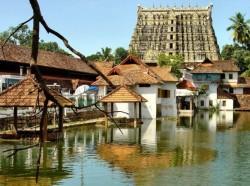
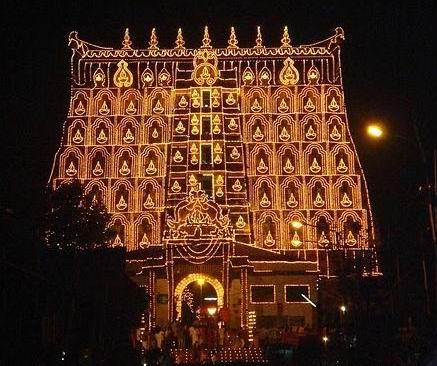
Sree Padmanabhaswamy Temple is one of the most famous Lord Vishnu Temples in Kerala, South India. Also known as Sree Ananda Padmanabhaswamy Temple, this Mahavishnu Temple is located inside East Fort, in Thiruvananthapuram - the capital city of Kerala, India. Lord Vishnu is enshrined here in the Anananthasayanam posture (in eternal sleep of yognidra), lying on Sri Anantha, the hooded snake. According to traditions, Sree Padmanabhaswamy Kshetram is believed to have been worshipped by Chandra (Moon God) and Lord Indra (the head of the Devas).

 
Importance of the Idol 
 
The idol of Sree Padmanabhaswamy Temple is made up of 12008 salagramams that compose the reclining lord. They are special because they are from Nepal, from the banks of river Gandhaki and they were brought to the temple with all pomp and gaiety on elephant top. On top of them "Katusarkara Yogam", Navaratnams, a special Ayurvedic mix, was used to give a plaster. Followers believe that the Lord has personally come in disguise and had saved many times the Travancore Kingdom from the clutches of enemies.


Gopuram


The foundation of the present gopuram was laid in 1566. The temple has a 100-foot, seven-tier gopuram. The temple stands by the side of a tank, named Padma Theertham (meaning the lotus spring). The temple has a corridor with 365 and one-quarter sculptured granite-stone pillars with elaborate carvings. This corridor extends from the eastern side into the sanctum sanctorum. An eighty-foot flag-staff stands in front of the main entry from the 'prakaram' (corridor). The ground floor under the gopuram (main entrance in the eastern side) is known as the 'Nataka Sala' where the famous temple art Kathakali was staged in the night during the ten-day uthsavam (festival) conducted twice a year, during the Malayalam months of Meenam and Thulam.


Significance 

Sree Anantha Padmanabhaswamy Temple is one of the 108 Divya Desams of Lord Vishnu. Divya Desams are the holiest abodes of the Lord Mahavishnu that are mentioned in the works of the Tamil Azhvars (saints). 

History


56756
It is believed that Sri Padmanabhaswamy Kshetram & its properties were controlled by Ettuveeil Pillamar under the guidance of Ettara Yogam in older times. But these Ettuveetil Pillamars & their cousins were defeated by King Marthanda Varma, who was the Maharaja of Travancore state. After that King Marthanda Varma made the last renovation of the temple & he took a pledge that he & his descendants would serve as the Padmanabha Dasa (servants of the Lord Padmanabha). Before the re-organisation of the states, the state emblem of Travancore was dextral conch-shell or valampiri Shanku, which was the royal insignia of Lord Vishnu. The present gopuram of this temple was laid foundation in the year 1566. Most people who have visited this temple are familiar with the fact that this temple stands by the side of Padma Theertham. There is a corridor in this temple which consists of 365 & at the same time one quarter sculptures granite stone pillars. During meenam & thulam, a ten day festival is conducted twice a year, in which Kathakali is staged during the night time in Nataka Sala. An important feature which is unique to Sri Padmanabhaswamy temple is that it has the idols of Lord Vishnu in all three different postures namely standing, sitting or reclining. That means the idols in the standing door is in the standing posture, the idols for festival processions are in the sitting posture & the idols inside the sanctum sanctorum are in the reclined position. The nivedyams or offerings of this temple include retna payasam, meni thula payasam, otta thula payasam, rice & jaggery pudding in ghee, paal payasam, pal manga, uppu manga(unripe mango soaked in brine water) etc. 

Rules & Timings

It should be noted that only Hindus are allowed to enter the Sri Padmanabhaswamy temple located in Trivandrum, the capital of Kerala. Dress code is very important for this temple. Lockers are available here. No men as well as women are allowed to wear dresses that display both legs separately. Also note that men are not allowed to wear the clothes above the waist. Devotees are permitted to take the hand bags inside the temple but camers or cell phones are not permitted.

Darshan times


Before noon: 3:30- 4.45, 6:30- 7:00, 8:30- 10:00, 10:30- 11:00, 11:45-12:00
Afternoon: 5:00- 6:15, 6:45-7:20

Festivals

756455Sri Padmanabhaswamy temple, the popular temple is associated with certain festivals like Alpashy festival, Painkuni festival, Navaratri festival, Laksha deepam etc. Among these festivals, the Navaratri festival is an annual festival associated with Sri Padmanabhaswami temple. During this festival, every year the famous swathi music festival is held & usually this festival lasts for about 9 days. The Kuthira Malika Palace located in front of the Sri Padmanabhaswamy Temple is having major importance during this festival. This is because the idols of Durga, Murugan & Saraswati are brought to this palace as a procession during the Navarathri festival. Laksha Deepam (hundred thousand lamps) is considered as the biggest festival of Sri Padmanabhaswami Temple. It should be noted that this festival commences once in 6 years & chanting of prayers as well as recitation of three vedas is done for about 56 days prior to this Laksha Deepam. As the name indicates hundred thousand oil lamps are lit in during these festivals. The Painkuni Festival as well as the Alpashy Festival lasts for ten days each. It is important to note that among the Alpashy Festival & the Painkuni Festival, the former is in October/November & the latter is in March/April.
 

Treasure worth Rs 1 lakh crore

A week after the stock-taking process began at the Sree Padmanabhaswamy temple in Kerala, two more vaults will be opened on Monday. The estimated value of the treasure found at the temple is estimated to be over Rs 1 lakh crore. 

Now there are apprehensions about the safety of the priceless wealth found inside the temple chambers. The Centre is expected to provide security forces to guard the temple premises following the discovery. The temple, one of the oldest in Kerala, may soon turn out to be one of the India's richest.A seven-member Supreme Court-appointed team is taking stock at the Sree Padmanabhaswamy temple in Thiruvananthapuram.The chambers are believed to contain priceless gold and silver ornaments. The chambers had been kept shut for the last 130 years but were finally opened on June 27 following a Supreme Court order.One of the chambers believed to have remained shut for nearly a century revealed precious jewels, stones, ornaments and metal lamps of rare heritage and antique values when it was opened and examined on Thursday.
The inner recess of this chamber was believed to have previously been opened during the reign of Travancore ruler Sree Visakham Tirunal about 130 years back The opening of the first four chambers showed that three of them housed gold ornaments, vessels, jewels and precious stones worth hundreds of crores of rupees. It also had gold chains, diamond-studded bracelets, a crown and a golden bow. The temple, built in 18th century by King Marthanda Varma of the Travancore royal lineage, is run by a trust under control of the royal house and Lord Padmanabha is the family deity of Travancore Royal house.
The Supreme Court appointed committee consists of two former Kerala High Court judges. The actual worth of the treasure will only be revealed in a report to the Supreme Court.The apex court had issued orders on a private petition, which sought measures for greater transparency and accountability in management of the temple.